Friday, August 04, 2023

AI and disaster response

 How can Artificial Intelligence reduce the impact of disasters?

Theme:  Artificial intelligence holds the promise of mitigating the impact of disasters by optimizing the allocation of relief resources with greater efficiency and effectiveness. It has the ability to expedite aid delivery and enhance the decision-making capabilities of relief workers in the field.

Summary

Disaster resilience efforts in the future might take on a different form compared to what we see today. For instance, when a cyclone or hurricane is approaching, advanced technologies like geo-spatial analysis, weather data, and historical disaster information could be harnessed to predict the number of people likely to be displaced and their probable destinations. This valuable insight could aid emergency responders in determining the required amount of aid, such as water, food, and medical care, and precisely where it should be dispatched.

Moreover, artificial intelligence algorithms could swiftly assess the extent of flooding, building damage, and road blockages by analyzing satellite imagery and weather predictions. As a result, rescue teams could efficiently distribute emergency assistance and identify individuals still at risk and cut off from escape routes, ensuring more effective and targeted aid delivery. 

McKinsey's Noble Intelligence represents one of many initiatives aiming to leverage the power of AI in assisting humanitarian endeavors. For instance, their team is working on an algorithm to significantly decrease the time required for assessing damage to structures like schools, reducing it from weeks to mere minutes. This algorithm utilizes a combination of satellite imagery, geo-spatial data, weather data, and other relevant information. The resulting insights can then be utilized to identify optimal locations for setting up temporary school tents and prioritize reconstruction efforts in the most effective manner.


 Another illustration of AI implementation involves various organizations utilizing AI techniques to analyze social media feeds in the aftermath of disasters. This form of analysis has the potential to offer crucial real-time information about the extent of infrastructure damage and the aid being provided to victims. By detecting images from shelters where people lack blankets or are waiting outdoors on the streets, this AI-driven approach can help identify urgent areas requiring immediate assistance.

Problems with Artificial Intelligence

The impact of these efforts is hindered by several challenges. Firstly, there is a limited scope, where many private-sector initiatives work with only a few government or NGO partners, focusing on specific use cases in isolation from the broader disaster-relief community. This lack of integration into established disaster relief protocols leads to fragmented efforts and may result in AI-derived insights and tools being provided to organizations unable to effectively maintain or incorporate them into their decision-making processes.

Secondly, despite the existence of abundant data, including satellite, geo-spatial, telecom, social media, and financial data, accessing this information when needed is not always possible. Additionally, datasets are seldom combined to unlock further insights, especially when combined with valuable data from experienced personnel on the ground. This on-the-ground perspective can be even more valuable than big data insights, but its systematic capture and analysis are often lacking.

Lastly, caution must be exercised in disaster situations where human lives are at stake due to AI's limitations. Claims about data analysis outcomes may not always be accurate, necessitating a rigorous review process to assess algorithm methods and assumptions. For instance, AI models designed to assess residential damage might be mistakenly used on commercial buildings, which rely on different materials, construction methods, and regulations. In an era where the ethics of AI are under scrutiny, there is a lack of agreed-upon standards for developers and users to follow.

Application

 First, there is a need to enhance collaboration among existing initiatives that currently focus on specific use cases with a few partners. This collaboration should evolve into a more impact-focused network of AI-driven disaster support. It is crucial to strike a balance between developing algorithms and ensuring widespread availability and usage of these tools in the front line of disaster relief. This can be achieved through capacity building efforts. Additionally, efforts within the data science community working on similar use cases should be streamlined to avoid duplication. Establishing domain-specific partnerships or coalitions, where industry and global agencies coordinate focused development teams, could be one effective model.

Second, in the short term, it is essential to develop more basic data capture and coordination tools across different agencies on the ground, rather than solely investing in highly advanced AI. These foundational tools can serve as valuable information "fuel" for future lifesaving algorithms. Therefore, dedicating an equal amount of development effort to both foundational tools and sophisticated algorithms would be beneficial.

Finally, there is an urgent need to establish domain-specific agreements on ethical AI principles. While global agencies like the United Nations and the European Union have initiated efforts to develop principles for the beneficial use of AI in general, it might take time due to the broad scope involved. In the meantime, it would be advantageous to narrow the focus to specific domains, such as disaster response, and align stakeholders accordingly. This could involve implementing an algorithm review process to ensure that AI solutions meet specified standards before their widespread release.

Source: Ashley van Heteren,, A., Hirt, M.,, & Van der Veken, L. (2020, January 14). Natural disasters are increasing in frequency and ferocity. Here's how AI can come to the rescue. World Economic Forum. https://www.weforum.org/agenda/2020/01/natural-disasters-resilience-relief-artificial-intelligence-ai-mckinsey/

Weather events increasing, deaths decreasing

What is the relationship between climate change and disasters?

 By John Fisher

 I read about extreme disaster impacts from what are considered reliable sources. But two things I note. It is difficult to find the data that supports these claims. Many of these organizations' claims and much of the news coverage is a repeat of what the other organization write. They seem to be quoting each other without reliable supporting data.

Here is a sample of some of the claims. 

 The World Economic Forum

  • Each year, over 160 million individuals face the risk of floods, hurricanes, fires, and various other natural calamities. Regrettably, this situation is expected to deteriorate further. Presently, natural disasters occur four times more frequently compared to 1970. Experts predict that these events may continue to increase in both occurrence and intensity due to the influence of climate change. 

The World Health Organization

  • Various emergency situations arise from natural hazards (such as earthquakes, hurricanes, floods, landslides, wildfires, and droughts), technological hazards (such as chemical spills and infrastructure disruptions), complex situations arising from conflicts, and outbreaks of diseases. These emergencies have significant implications for public health and affect populations in all settings.
  • Disasters caused by natural hazards, like earthquakes, hurricanes, tsunamis, and floods, are witnessing a rise in intensity, frequency, and overall impact, partly attributed to climate change.
  • Radiological and nuclear emergencies vary greatly in scale and nature, ranging from isolated cases of occupational or medical over-exposure to potential catastrophic events with global ramifications.

For example, the World Economic Forum, cited information from an article in the Economist, claiming that natural disasters are four times worse than in 1970. This is based on the following chart.

Another article by Bjorn Lomborg called "Thinking smartly about climate change" (Imprimis, April/May 2023) sheds insights about climate change and disasters and appears to debunk these claims. The annual number of hurricanes coming ashore in the U.S. since 1900 is declining, not increasing. In Australia, despite media reporting of wildfires being out of control, satellite images showed that in 2019 and 2020 the number of fires were at the lowest on record in Australia. Fire data shows a decrease in fires over the last 25 years. In the 1920s about 500,000 people died annually because of climate relate events. In the last decade the average has been 18,000. In 2020 the number dropped to around 11,000. A big reason for the drop in numbers is because of the human being's ability to adapt. "If a country wants to reduce the number of its citizens dying as a result of climate," Lomborg says, "it should pursue economic and technological development.

 I'm of the view that with new technology and better farming practices many of these problems can be solved. I listened to a webinar  from an agronomist in the high desert of Nevada, who is using no chemical fertilizers and no till farming procedures. The dung from cattle is used to grow new grasses. He says plant life changes weather patterns. While clouds and rain pass over deserts, land that has plants invites rain.

2017 figures for disaster impacts are reported on ReliefWeb.  Since 1988, the Centre for Research on the Epidemiology of Disasters (CRED) has been responsible for maintaining the Emergency Events Database (EM-DAT). Originally established with the backing of the WHO and the Belgian government, EM-DAT has two primary aims. Firstly, it serves to inform humanitarian efforts on both national and international scales, facilitating more informed decision-making for disaster preparedness. Secondly, the database provides unbiased data to assess communities' susceptibility to disasters and assists policy-makers in establishing priorities. The CRED document is available at https://cred.be/sites/default/files/adsr_2017.pdf

Reference: Economist Data Team. (2017, August  29). Weather-related disasters are increasing
But the number of deaths caused by them is falling. The Economist. https://www.economist.com/graphic-detail/2017/08/29/weather-related-disasters-are-increasing

Balkans preparedness for disasters

 How are disasters handled in the Balkans?

By John Fisher

Theme: I used the heading, "How are disasters handled in the Balkans?," to do an internet search. This article was the seventh listing. It proposes CERT as a means of preparing people in the Balkans for disasters.

Summary: The global security landscape has become increasingly complex in recent decades due to factors such as modernization, rapid technological advancements, strategic shifts, and global political developments. The Balkans region is particularly vulnerable to natural disasters, which are exacerbated by fast urbanization and unregulated construction practices that disregard relevant codes and misuse land and natural resources. To address these threats effectively, a comprehensive strategy must be developed and implemented, involving not only institutions but also the active participation of the entire society.

Application: This paper proposes the implementation of the CERT concept in the Balkans to enhance citizens' knowledge and preparedness for disasters. Introducing the CERT program would require collaboration and support from local officials and public safety agencies. Trained instructors from the United States could be involved in teaching the program, while local community members, including students, seniors, and retired individuals, would be recruited for CERT training, which could be completed in 20 hours over a week. After the initial training, ongoing support and sponsorship from officials would be crucial, with graduates of the program being empowered to teach future classes.

Reference: Bela, M., Fisher, J.R., & Keqmezi Rexhepi, Z. (2019,, October). CITIZEN KNOWLEDGE AND READINESS FOR DISASTERS IN THE BALKANS. Knowledge International Journal 34(1):159-163. DOI: 10.35120/kij34010159b https://www.researchgate.net/publication/357398238_CITIZEN_KNOWLEDGE_AND_READINESS_FOR_DISASTERS_IN_THE_BALKANS

Map of the Balkans

Comments by Kierra Hardy 

The region's fast urbanization and unregulated construction practices have escalated the vulnerability of communities to natural hazards. Disregard for relevant building codes and mismanagement of land and natural resources exacerbate the potential for disaster occurrence and amplify its consequences. Addressing these issues requires a comprehensive strategy that goes beyond the involvement of institutions alone.

A holistic approach that incorporates the active participation of the entire society is critical for effective disaster preparedness and response. By engaging local communities, policymakers, non-governmental organizations, and relevant stakeholders, we can foster a culture of resilience and preparedness. Empowering individuals with knowledge and skills through educational programs, such as the Community Emergency Response Team (CERT) concept, can significantly enhance their ability to respond effectively during crises.

Moreover, collaborative efforts between governments, civil society, and international partners are vital for strengthening disaster management mechanisms. By sharing best practices, lessons learned, and resources, we can collectively work towards building resilient communities that can withstand and recover from natural disasters more efficiently.

It is essential to recognize that disasters do not discriminate based on socio-economic status, ethnicity, or nationality. The impact of these events affects all members of society. Therefore, an inclusive approach that considers the needs and perspectives of all individuals is crucial in crafting effective disaster management strategies.

By fostering a culture of preparedness, promoting sustainable development, and addressing underlying vulnerabilities, we can better equip communities in the Balkans region and beyond to navigate the challenges presented by the evolving global security landscape. Ultimately, the collective efforts of individuals, institutions, and society at large will determine our resilience and ability to adapt to the uncertainties of the future.


Thursday, August 03, 2023

Recovery in developing countries

How are Recovery Processes Different in Developing/Developed Countries?

By Kierra Hardy


Summary:

Disaster recovery processes in developed countries, such as the United States, and developing countries differ significantly due to variations in resources, infrastructure, governance, and socio-economic conditions. While developed countries often have well-established and robust disaster management systems, developing countries face challenges in building and implementing effective recovery mechanisms. Here, we will compare the disaster recovery process in the United States to that of developing countries and identify areas for improvement in both contexts.

    Disaster Recovery in Developed Countries (United States): In the United States, disaster recovery processes benefit from well-funded government agencies, advanced technology, and established legal frameworks. Federal Emergency Management Agency (FEMA) plays a central role in coordinating disaster response and recovery efforts, and collaboration with state and local governments is essential for a coordinated response. Developed countries often have access to modern communication systems, early warning technologies, and well-equipped emergency response teams, enabling a rapid and efficient response to disasters. The well-developed infrastructure and financial resources available in developed countries facilitate timely recovery and reconstruction efforts.

    Disaster Recovery in Developing Countries: In contrast, developing countries face significant challenges in disaster recovery. Limited resources, weak governance, and inadequate infrastructure hinder their ability to respond effectively to disasters. Many developing countries lack adequate financial support, technical capacity, and trained personnel to manage disaster recovery efforts. Additionally, the high population density and poverty in many developing nations exacerbate the impact of disasters, leading to more extensive damage and higher loss of life. The lack of early warning systems and access to real-time information further complicates disaster response and recovery.

Areas for Improvement in Both Contexts:

    Capacity Building and Training: In both developed and developing countries, there is a need for continuous capacity building and training of emergency responders, local authorities, and communities. Regular training sessions and workshops can enhance preparedness, improve response coordination, and empower communities to take proactive measures during disasters. Governments and international organizations should invest in developing countries' capacity to manage disasters effectively.

    Community Participation and Empowerment: Community participation and empowerment are essential in both contexts. In developed countries, involving communities in disaster planning and decision-making can lead to more comprehensive and inclusive recovery strategies. In developing countries, empowering local communities with knowledge and resources can improve their resilience and ability to cope with disasters. Community-based disaster risk reduction initiatives can be particularly effective in vulnerable areas.

    Innovative Technology and Information Sharing: Both developed and developing countries can benefit from adopting innovative technologies for disaster management. Advanced early warning systems, remote sensing, and real-time data collection can significantly improve disaster response and recovery. Encouraging information sharing and cooperation between countries can enhance global disaster preparedness and response efforts.

    Strengthening International Cooperation: Developed countries can support disaster recovery in developing countries by providing financial assistance, technical expertise, and sharing best practices. International cooperation and partnerships are crucial in tackling cross-border disasters and addressing global challenges like climate change.

Sources:

    UN Office for Disaster Risk Reduction (UNDRR). (2019). Global Assessment Report on Disaster Risk Reduction 2019. Retrieved from: https://gar.undrr.org/sites/default/files/publicationpdf/gar2019.pdf

Links to an external site.

United Nations Development Programme (UNDP). (2007). Human Development Report 2007/2008: Fighting Climate Change: Human Solidarity in a Divided World. Retrieved from: http://hdr.undp.org/sites/default/files/reports/268/hdr_20072008_en_complete.pdf
 

Poorer people have a harder time recovering from disasters - futurity.org


Defining the Role of Public Health in Disaster Recovery

Education following a disaster

 Why is returning to education important following a disaster?

 By Truman Sharp

Theme: Returning to education allows for children to somewhat return to normalcy which helps them recover from disasters. Efforts should be made to provide children with education following disasters.

Summary: Children are a particularly vulnerable following disasters. Sometimes they are left without parents and homes. Protecting them and getting them back in school is important for their survival after disasters. According to Briggs (2018) around 37 million children have disrupted education every year due to environmental threats. Schools can be destroyed from disasters due to poor site locations, school design, or construction.

Often children have difficulties once they return to school. They may be unable to learn due to having fear or trauma and studies have show that they show signs similar to PTSD which affects their academic performance (Briggs, 2018), To combat this some teachers are being trained to provide psychosocial support for children.

One of the main reasons why its important to help children return to education following disasters is it allows for an opportunity to return to normalcy. This can help bring hope and healing. In addition to helping children return to schools, humanitarian organizations are also providing vital services like vaccinations, medicines, child protection referrals, hygiene messaging, soap, clean water, and food (Briggs, 2018). This also helps parents to recover by building new shelters, recovering possessions, and finding employment (Briggs, 2018).

Save the Children provided three guiding principles in helping children return to education. They are protection, continuity and build back better. Protection includes helping children physically and psychologically in emergencies. Continuity ensures education begins quickly in a crisis to prevent decreases in education. Build back better includes changing the situation for the better.

Application: The benefits of beginning immediate education for children and other victims of a disaster are that it helps children have a somewhat return to normalcy and helps them recover. This return to normalcy gives hope and promotes healing. Additionally, immediate education helps to prevent backtracks in a child's education and helps them to keep learning without have to relearn things. Education and schooling affect protection and security for children in the wake of a disaster by providing them with a safe place they can go to learn and not be vulnerable to outside threats. It can also provide psychological protection as well. Education is important for victims of disasters because it provides them with a way to recover and cope with what has happened to them. It also gives them something their mind can focus on other than the disaster that just happened to them.

Reference:

Briggs, B. (2018, December 13). Safe Schools: getting children back into education after disaster strikes. Theirworld. Retrieved from https://theirworld.org/news/safe-schools-getting-children-back-into-education-after-natural-disaster/. 

Tuesday, August 01, 2023

Impact of nuclear power plant accidents

 How has the impact of nuclear power plant accidents impacted the health of people affected?

Theme: Nuclear power plants are being phased out because of the fear of deaths from potential radiation leakages. In fact, nuclear plants are the cheapest and safest supplier of energy.

Summary:

I recently read about the three worst nuclear plant accidents in Michael Shellenberger's book, Apocalypse Never: Why environmental alarmism hurts us all (2020). The worst was in Chernobyl on April 26, 1986. Plant workers lost control in an unauthorized experiment that caused a reactor to catch fire. Shellenberger cites experts who debunk several of the claims made by the HBO movie about the Chernobyl nuclear plant accident. According to the U.N., 28 firefighters died soon after putting out the Chernobyl fire. Nineteen more died in the next 25 years from various causes, which were unlikely related to radiation. The U.N. concluded "the assignment of radiation as the cause of death has become less clear." The U.N. estimated 16,000 future cases of thyroid cancer attributable to Chernobyl radiation, while the actual number is closer to 5,000. Thyroid cancer is easily treated and has a mortality rate of 1 percent. Thyroid cancer deaths over a 80 year period might result in from 50 to 160 deaths. The HBO movie claims a spike in cancer in Ukraine and Belarus while WHO states the radiation levels are only slightly above normal in these two countries. Colorado has higher radiation levels and some of the lowest cancer rates in the United States.

The most recent accident occurred on March 11, 2011, when a tsunami from an earthquake hit the Fukushima Daiichi nuclear plant on the eastern coast of Japan. The plant lost electricity and workers couldn't keep pumps going to cool hot uranium fuel inside the reactor cores. While the tsunami was devastating on the population in eastern Japan, nobody will die by radiation poisoning from the nuclear accident. Japan gave one worker's family a settlement, following his death, but it is unlikely the cancer was caused by the nuclear plant accident.

The most serious nuclear plant accident in the United States occurred in 1979 at the Three Mile Island plant in Pennsylvania. The meltdown caused a national panic which slowed down the building of nuclear plants. No one died nor was there an increase in risk of cancer from the Three Mile Island accident.

Application:

Nuclear energy may be the safest and most reliable source of energy. The health impacts are minuscule. Many people are dying from the change to other energy sources, particularly from particulate matter that causes health problems. France has maintained its nuclear plants while Germany has decided to move to alternative energy sources supported by conventional means, mainly fossil fuels. The cost of the phase out from nuclear energy in Germany is estimated at $12 billion a year, 70 percent attributable to health problems. In addition, the cost to German people for energy bills is much higher than in France. In developing countries, reliable energy sources are shown to be the most important means of improving the quality of people's lives.

Reference: Shellenberger, M. (2020). Apocalypse Never: Why environmental alarmism hurts us all. New York: Harper Collins Publishers. ISBN: 978-0-06-300169-5


Three Mile Island Nuclear Plant is still in operation

Thursday, September 29, 2022

Drones used in Surfside rescue effort


This photo was likely taken by a drone (CBS News).

A 12-story oceanfront condo tower partially collapsed in the early hours of Thursday, June 24, 2021 in Surfside, near Miami, Florida. Responders began a massive search-and-rescue effort with dozens of rescue crews from across South Florida and around the world. The search lasted 29 days. Responders rescued 35 people; 98 people died. Much of the rescue and cleanup effort depended on drones. The debris pile was so unstable and so dangerous that responders sent up drones before committing people to search or remove wreckage.


Tuesday, September 14, 2021

Monday, April 19, 2021

COVID NUMBERS for EMS FIRE


COVID statistics for EMS and Firefighters
getwallpapers.com

CURRENT UNITED STATES FIRE & EMS NUMBERS


As of early last week, there were 175 total reported deaths to United States fire and EMS personnel due to COVID-19 complications: 121 fire personnel; 54 EMS only according to the NFFF.


New York (14%), Pennsylvania (9.9%), Texas (8.3%), and New Jersey (7.4%) respectively represent the states with the highest number of COVID-related deaths for fire personnel.


New York (28%), New Jersey (24%) and Pennsylvania (5.6%) represent the states with the highest number of COVID-related deaths for EMS personnel.


The average age of Fire personnel who died due to COVID-related complications is 55.8.

The average age of EMS personnel who died due to COVID-related complications is 55.7.

# of Fire personnel COVID-related deaths in 2020: 81

# of Fire personnel COVID-related deaths in 2021 to-date: 40

# of EMS COVID-related deaths in 2020: 51


Sourec: FireFighterCloseCalls.com (2021, April 17).  https://www.firefighterclosecalls.com/updated-stats-on-united-states-firefighter-ems-covid-19-deaths/


-----------------------------


The Officer Down Memorial Page reported 360 police officers died in the line of duty in 2020, more than twice the 148 reported last year. The group said that 232 officers had died due to COVID-19, more than all of the reported deaths that took place in 2019.

The US Fire Administration reports annual firefighter deaths. Numbers of 2020 were not available. Of the 62 firefighters who died in 2019, 33 died of heart attacks. 

Wednesday, April 07, 2021

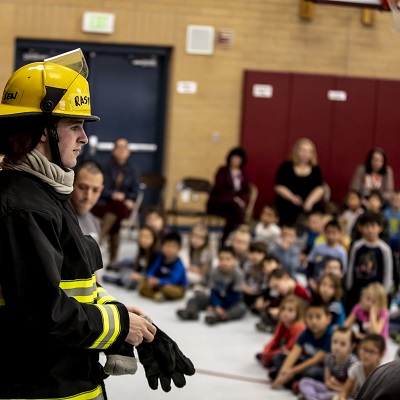
Firefighter students give fire safety presentations to K-3

 https://www.uvu.edu/es/rca/images/kids.jpg

 Firefighter student gives presentation to K-3 students

Utah Valley University Firefighter RCA students in the Spring 2021 semester contacted 512 students, ages K-3, to make fire safety presentations. They gave out 370 coloring books.  Total number of children contacted since the school-visit program began in 2014 is 8094. 

More information about the Recruit Candidate Academy can be found on the Utah Valley University website at https://uvu.edu/es/rca/index.php

Graduates of the RCA program and other certificate programs in Emergency Services can often find jobs while they are continuing their education. Graduates of programs in RCA, EMT, Paramedic, and Wildland Firefighting become eligible to take state and national exams that will certify them in these areas. 

Monday, April 27, 2020

Victor Davis Hanson: COVID-19 and the Lessons of History


HooverInstitution - Recorded April 9, 2020, 11AM PST

Hoover Institution Fellow Victor Davis Hanson on COVID-19 and the Lessons of History.

The Hoover Institution presents an online virtual briefing series on pressing policy issues, including health care, the economy, democratic governance, and national security. Briefings will include thoughtful and informed analysis from our top scholars.

ABOUT THE FELLOW

Victor Davis Hanson is the Martin and Illie Anderson Senior Fellow at the Hoover Institution; his focus is classics and military history.

12:05 COVID-19 is the first epidemic where models were developed without knowing the actual number of people that are affected. Models are used to predict potential impact in terms of number of deaths and are used in developing public policy. If the model is not based on good (or no) data, its predictions are off and public policy decisions have the potential to be wrong. If the number of affected people is 10 times higher than predicted, the number of deaths per thousand is 10 times less.

14:20 Models have consequences. Dire warnings make people hysterical and they take drastic measures.


Friday, April 24, 2020

Doctors provide differing opinion on shelter-in-place order, say county ...


Bakersfield, California (April 23, 2020) - DOCTORS DISAGREE WITH SHUTDOWN: Doctors Dan Erickson and Artin Massihi of Accelerated Urgent Care refuse to wear masks outside. They say the longer people stay inside the more their immune system drops. They're calling for Kern to reopen immediately. PART 2 of the interview is HERE: https://youtu.be/zb6j7o1pLBw Link to the original article.https://www.kget.com/health/coronavirus/doctors-provide-differing-opinion-on-shelter-in-place-order/https://www.kget.com/health/coronavirus/doctors-provide-differing-opinion-on-shelter-in-place-order/

Tonight (April 27, 2020) Laura Ingraham interviewed Doctors Dan Erickson and Artin Massihi of Accelerated Urgent Care in Bakersfield, California, who claim that Californians should no longer be required to shelter-in-place because of COVID-19. At the end of Ingraham's show, she indicated that a YouTube video of the doctors which had gone viral had just been removed by YouTube. See the report at my MediaFile blog. Because YouTube might also censor this video of the doctors' interview, I'm providing a summary below. (Any errors in the transcription are my fault.)

0:00 - Dr. Erickson indicated that he and Dr. Massihi are providing findings from their own research and observations of the COVID-19. Their company is the main COVID testing center in Kern County, California. They have done over 5000 tests for COVID-19 in Kern County.

Since the beginning of the Coronavirus pandemic, more data has been gathered including a study in Santa Clara County, California. Their study and the study from Santa Clara show that the number of people with COVID-19 has been under reported, so that in fact the per capita death rate is much lower than feared.

2:30 - Because hospitals in Bakersfield are not seeing patients with other diseases or doing elective surgeries, the hospital floors are shutting down and doctors and nurses are being furloughed. When COVID is over, there may be a backlog of patients, many with serious illnesses. Patients with cancer and hypertension are not coming in because they are afraid they might get COVID at the hospital, Erickson said.

3:20 - Typically in an epidemic, the sick are quarantined, not the healthy. With COVID-19 the land was shut down when not all the facts were known. Now that more data is available the country should be opened up.

In Kern County 5213 people have been tested. There were 340 cases, 6.5% of those tested. These numbers are similar to the ordinary flu. In California over 200,000 people have been tested. Of these 33,865 tested positive, about 12%. If these figures (12%) were used to extrapolate to the larger population of almost 40 million, there would be about 4.7 million cases in California. There have been 1227 deaths in California, 0.03 percent of those infected. No more than the common flu. 

6:13 - As more tests are taken it might show that more people test positive, but the death rate would stay the same. 

New York State has had 256,000 cases. Of those tested 39% were positive. If the figure 39% were used for the population of 25 million, the number of deaths (19,410) in New York would be 0.1% of those infected.  92% have recovered without going to the hospital. 

In the USA of 4 million people tested, 19.6% have been positive (802,590 cases). The numbers are similar to the flu, which kills 20,000 to 50,000 people a year. Business is not shut down for the annual flu. 

11:20 - A flu vaccine is available, but how many people get the vaccine - maybe 50%.

12:34 - In Spain, of a population of 47 million, 930,000 have been tested with 22% positive. The death rate is 0.05% (21,282). 90% recovered without going to the hospital.

16:30 - Sweden has not been quarantined; businesses have stayed open, while the sick have been told to stay home and others have followed social distancing guidelines. Of a population of 10.4 million, there have been 15,200 cases and 1765 deaths. Twenty-one percent have tested positive, suggesting the total with the virus was 2 million cases. In California, where the people have been isolated, there have been fewer deaths (about 1220). The population is almost 4 times greater.

14:04 - In neighboring Norway, where people were quarantined, of 71,000 tested, 4.9 % were positive. Of a  population of 5.4 million, there were 182 deaths (0.03%). Did these figures necessitate a shut down and furloughing doctors?

15:15 - The secondary effects of COVID-19 have been devastating and long-lasting. The amount of child molestation and spousal abuse has increased. Alcoholism and suicides have increased. Education has been dropped and the economy with millions of unemployed has been devastated. And this because of a flu that has been no worse than the common flu. (Numbers of deaths are not over the figures from 2017-2018 when 40,000 to 50,000 people died.)

17:30 - Another effect of the quarantine of healthy people has been the impact on immune systems. When people are not allowed to get out among other people, they do not build up immunity to the virus. Immunity is developed by touching objects and other people and by touching the face.

32:00 - More testing is needed because maybe up to 25% of people will prove to be asymptomatic. Typically, people develop resistance to disease through herd immunity, where people are exposed to the virus and most survive. By locking down people are not protected against opportunistic infections. 

36:00 - Conclusions - We no longer need to shelter in place; we no longer need to keep businesses closed. Measures need to be taken to prevent this kind of closure from happening again. The secondary effects have been devastating. We need to quarantine the sick, not the healthy. We should do more testing of people, so the sick can be isolated. 

43:00 - Testing of workers should start with the food industry. The virus remains for three days on plastic. The virus has been brought into homes on packaging when shopping or fast food pickup. There is no sense behind the decisions to keep big businesses open when small businesses are closed.


Monday, April 06, 2020

Chicago Fire Dept. & The Snorkel (circa 1965)


A special thanks to our first responders who are making a difference during the COVI-19 pandemic. 


Consider a career on the front line. 

Go to UVU Emergency Services Department for more information.


Grocery Shopping Tips in COVID-19 Revised (March 31, 2020) www.DrJeff...


Grocery Shopping Tips in COVID-19 Revised (March 31, 2020) www.DrJeffVW.com

Thursday, March 26, 2020

Coronavirus - Protect yourself and family by supporting your immune system


Start viewing at 12:10 minutes to find out more about techniques to manage stress and support immunity.


March 25, 2020 - On this edition of LifeWave NOW, cohosts Jim Caldwell and Paula Shaw bring on LifeWave CEO David Schmidt to talk about what steps the company is taking regarding the Coronavirus and its effects, and what viewers can do to protect themselves and their families.

For more information, contact https://lifewave.com/riverglen

Monday, March 23, 2020

Pandemic Case Study: 35 die in Washington state nursing home


Use the Wall Street Journal article to provide background information for a pandemic case study.

A case study should have the following sections.


  • Background information
  • Problem statement
  • Data analysis
  • Alternative solutions
  • Evaluation of solutions
  • Recommendations
  • Implementation plan
  • References
  • Appendices (other related information, charts, tables, etc.)


Reference: Elizabeth Koh, Jon Kamp and Dan Frosch. (March 23, 2020). One nursing home, 35 Coronavirus deaths: Inside the Kirkland disaster. The Wall Street Journal. https://www.wsj.com/articles/one-nursing-home-35-coronavirus-deaths-inside-the-kirkland-disaster-11584982494 

Thursday, March 19, 2020

What to do in an earthquake


Fallen debris is seen at a building in Salt Lake City after an earthquake on Wednesday, March 18, 2020.Spenser Heaps/The Deseret News via AP
Salt Lake City, Utah (March 18, 2020) - An early morning 5.7 magnitude woke up some residents along Utah's Wasatch front. Aftershocks continued throughout the day. By the evening some 60 aftershocks had occurred. 50,000 residents were without power. Damage was minimal and no injuries were reported.

However, a number of buildings were damaged and some falling debris landed on the streets and sidewalks. Downtown workers who were not home already because of the corona virus were told to stay home.

In an earthquake, the best advice is DROP,  COVER, and HOLD ON. Get under a desk or a table, not in a doorway.


Even in a taller building, Utah Emergency Management recommends it is better to stay indoors until the earthquake has stopped. Then, go out only if you are going to move to a safer location.

When thousands of people were evacuated from the Salt Lake City airport, it was only after it was deemed safe to go outside.


Utah responds to 5.7 earthquake: Salt Lake International Airport closes ...

Scientist David Schmidt provides COVID-19 options


Wednesday, March 18, 2020

Utah has a magnitude 5.7 earthquake

Utah PIO Association (March 18, 2020)

Dr. Keith Koper of the University of Utah Seismograph Stations explains the magnitude of the 5.7 earthquake in Utah today.

The best sources for information are:

@UtahEmergency on Twitter
UtahEmergency on Facebook
University of Utah Seismograph Stations
Utah Geological Survey


RUMORS THAT NEED TO GO AWAY:

Myth: Officials are predicting a larger earthquake in the next 30 minutes.
Fact: Earthquakes cannot be predicted. However, we are 95 percent certain that the earthquake this morning was the main quake.

Myth: Officials (FEMA) are telling people to evacuate
Fact: They are not. This was a strong earthquake, but see actual sources above. We expect to see some damage, but we will get through this

Myth: Shut off your natural gas
Fact: Only shut it off if you hear or smell gas escaping.

Myth: Get in a doorway.
Fact: It's better to get under a table or desk.


Myth: Earthquakes can be predicted. They cannot be predicted, however, we expect that the earthquake we felt today was the largest one of the sequence. That is true in 95% of earthquakes.

Preparedness tip:


Sunday, March 15, 2020

Utah plans to combat Coronavirus

Announcements from Gov. Gary R. Herbert, the Utah COVID-19 Community Task Force, the Utah Department of Health, and the Utah Association of Local Health Departments

March 12, 2020

These proactive measures to limit the spread of novel coronavirus (COVID-19) in Utah communities are effective for the next two weeks beginning on Monday, March 16, 2020. At that time, the Utah Coronavirus Task Force will re-evaluate these recommendations to determine the most appropriate actions we need to take as a state to keep Utahns healthy. 
Limit mass gatherings of more than 100 people if everyone in the group is healthy, including church. 
This includes gatherings such as church and religious services, concerts, conferences, and other events or places where large numbers of people gather together. 
This recommendation does not currently apply to public K-12 grade schools. We ask that local school districts and schools with closely with their local health officers on a case-by-case basis to determine if or when it is appropriate to close schools. 
If you are immunocompromised or have underlying medical conditions which put you at an increased risk for severe symptoms of COVID-19, you should not attend any mass gatherings. 
Stay home if you are sick. We ask employers for leniency and tolerance for employees who are sick and need to stay home to help prevent the spread of this disease. 
If you are older than the age of 60 or are immunocompromised, you should limit your participation in groups of more than 20 at a time. 
Anyone who is immunocompromised or who has underlying medical conditions which puts them at an increased risk for severe symptoms for COVID-19 should avoid gatherings with 20 or more people. This recommendation does not apply to businesses. 
If you can work from home, we are asking business leaders to implement teleworking as soon as possible. 
Businesses should allow employees to telework immediately, if feasible. We encourage business leaders to make teleworking available to as many employees as possible and expand what they may already be doing in this regard. 
Long-term care facilities will have restricted or screened access. 
Local health departments must protect our most vulnerable citizens. We ask that local health departments work closely with long-term care facilities to restrict visitor access and monitor employees and visitors for symptoms of COVID-19. 
All Utah Systems of Higher Education institutions are ‘going digital’. Campuses and campus services will remain open. Labs will still be held. 
Encourage social distancing and travel restrictions for students, employees, and staff. Restrict nonessential travel for employees. School-sponsored events and gatherings should be canceled. Classes will be conducted online as immediately as possible 
K-12 schools (public, charter, private) are being asked to prepare to close. There is a 3 tiered plan in place for this, called “Ready, Set, Go.” 
Closing a school is a local decision supported by the state and public health officials. The decision to close a school should not be made out of fear or anxiety but rather in close coordination with your local health officer. Do not close schools unless there is an imminent threat to students and staff and in close coordination with your local health officer. Additional guidance on school closures is forthcoming. 
All school related out-of-state travel is canceled. Extracurricular activities will be evaluated by local health officers in consultation with schools. Schools should begin planning to postpone or cancel large school-sponsored events and gatherings, such as assemblies, conferences, sporting events, etc. again, in consultation with their local health officer. Consider staggering recesses, lunch times, and the start and end times of school dismissal so students aren’t gathered in large numbers at one time. 
Teachers and staff should amplify hygiene measures in the classroom such cleaning high-touch surfaces regularly and having students wash their hands more frequently before and after lunch, recess, etc.


Mardons: Science shows benefits of prayer and meditation

Mardons: Science shows benefits of prayer and meditation

When used in conjunction with other healthy habits, such as a nutritious diet and regular exercise, spiritual practice can bolster the immune system and quiet the mind. If Canada follows suit with Europe and Asia by closing public spaces, solitary prayer and meditation is a compelling alternative to social worship and may help Canadians stay healthy in body and mind.

Austin and Catherine Mardon

Utah response to Coronavirus